
Home » Local SEO
What Is Local SEO in the AI Search Era and Why Does It Look Different Now?
Local SEO in 2026 is the technical and content infrastructure layer that makes your Sacramento business findable, verifiable, and rankable across both traditional Google search and AI-powered search platforms. It encompasses your site’s technical health, on-page optimization, schema implementation, neighborhood landing page architecture, citation network, and internal linking system, the complete foundation that every GEO and AI citation strategy is built on top of. Without it, higher-level AI optimization produces diminished results.
Traditional local SEO as practiced from 2015 to 2022 focused on three levers: Google Business Profile, NAP citations, and backlinks. Those levers still matter. But the local search landscape has expanded significantly. Your business now needs to be verifiable not just to Googlebot but to the retrieval systems powering ChatGPT, Perplexity, and Gemini. Those systems read your technical infrastructure, schema implementation, and content architecture as a combined entity signal and businesses whose local SEO is weak at the foundation level are penalized in AI citation frequency even when their content is excellent.
Local SEO is no longer just about ranking on a map. It is the entity infrastructure that determines whether your Sacramento business is trusted enough to be recommended by AI.

The Sacramento Local SEO Landscape: What You're Competing Against
The Sacramento DMA is a highly competitive local search market across most professional services, healthcare, and B2B categories. The businesses currently dominating Local 3-Pack and AI citation positions share a common infrastructure profile: complete GBP entity data, consistent NAP across 20+ directories, neighborhood-specific landing pages, implemented schema, and a structured internal linking architecture. Businesses without this foundation are not competing on equal footing, they are competing with one hand tied.
Understanding the competitive baseline is the starting point for every Sacramento local SEO engagement we execute. The Sacramento market has several dynamics that differ from smaller or larger metros:
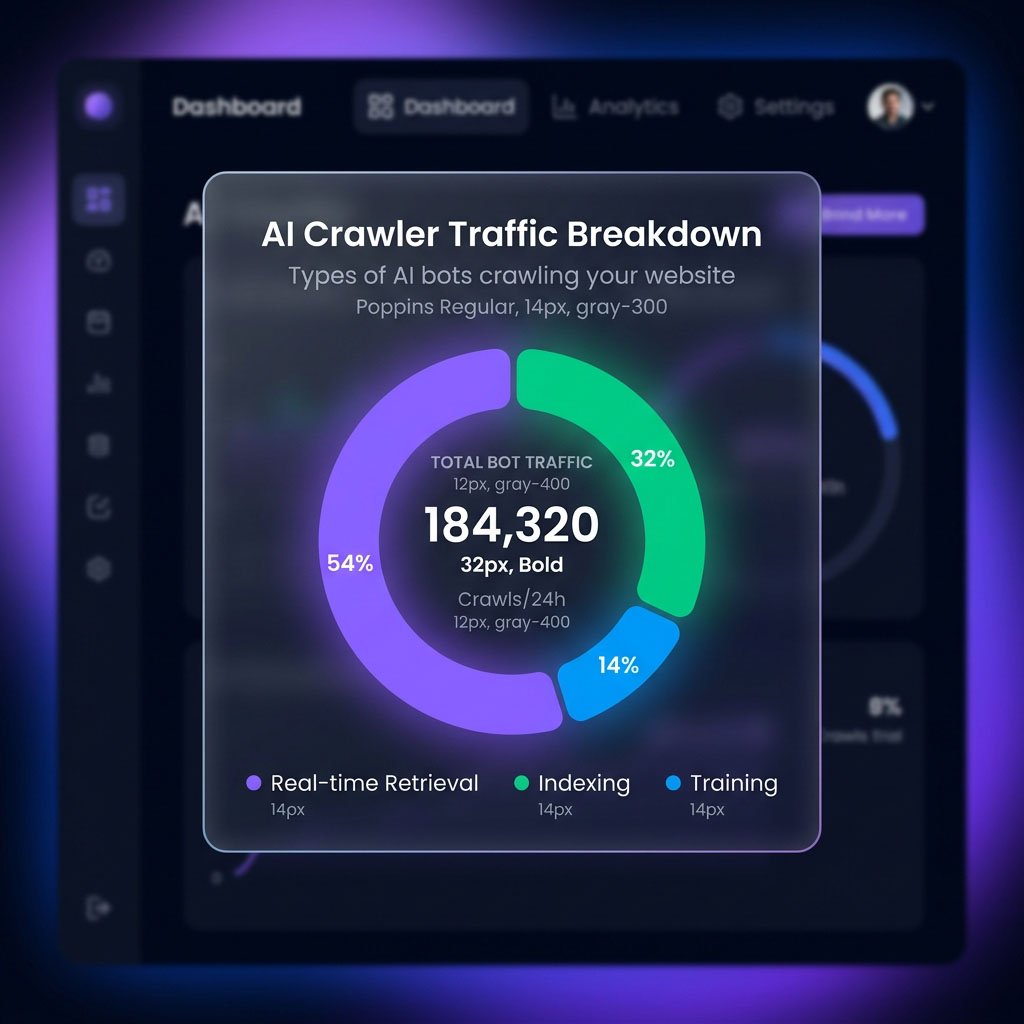
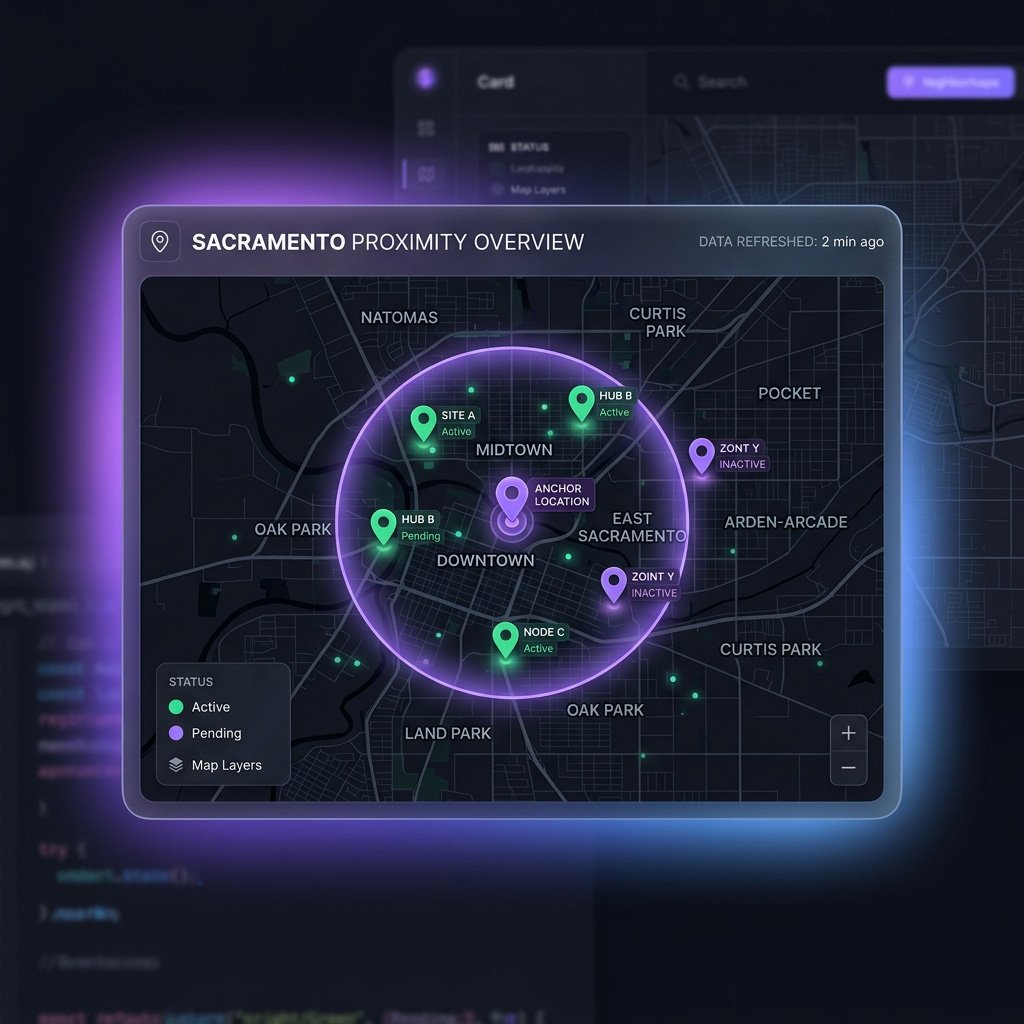
Sacramento’s neighborhood geography creates significant proximity grid opportunities. The DMA’s distinct neighborhood structure Land Park, East Sacramento, Arden-Arcade, Natomas, Curtis Park, Midtown, the Pocket, West Sacramento, Elk Grove means that businesses with neighborhood-specific content and entity signals can dominate hyper-local queries that competitors with only city-level optimization cannot contest.
Sacramento’s AI search adoption lags major metros by 18 to 24 months. San Francisco and Los Angeles businesses began implementing GEO-ready local SEO infrastructure in 2023 and 2024. Sacramento’s competitive landscape remains largely unoptimized for AI citation creating a window for early movers that is narrowing monthly.
Sacramento’s professional services concentration creates high-value citation opportunities. The state capital’s density of law firms, government contractors, healthcare providers, and B2B service companies means that AI citation placement in these categories carries outsized revenue value compared to most California markets of similar size.
What Our Local SEO Service Covers
Our local SEO service is a comprehensive technical and content infrastructure engagement — not a monthly reporting package with minimal execution. Every engagement begins with a full-site audit and produces a 90-day implementation roadmap that we execute on your behalf.
Technical SEO Foundation
The technical health of your website is a prerequisite for local SEO performance. AI crawlers and Googlebot alike require clean, fast, indexable sites. We audit and remediate:
- Core Web Vitals: LCP (Largest Contentful Paint), CLS (Cumulative Layout Shift), and INP (Interaction to Next Paint) scores against Google’s thresholds. Pages failing Core Web Vitals are penalized in both traditional rankings and AI retrieval priority.
- Crawlability and indexation: Verifying that all priority pages service pages, location pages, blog posts are crawlable and indexed. Identifying and correcting canonicalization errors, redirect chains, and orphaned pages.
- Mobile optimization: All local search queries are predominantly mobile. Every page is audited against mobile usability standards with particular attention to tap target sizing, viewport configuration, and mobile page speed.
- Server-side rendering: Content that only renders after JavaScript execution is invisible to many AI retrieval crawlers. We identify JavaScript-rendered content blocks that contain business-critical information and recommend server-side rendering solutions.
- Page speed: Target load time under 2.5 seconds for all priority pages. Slow pages are deprioritized by both Google’s traditional algorithm and AI retrieval systems that weight content freshness and accessibility.
Schema Implementation
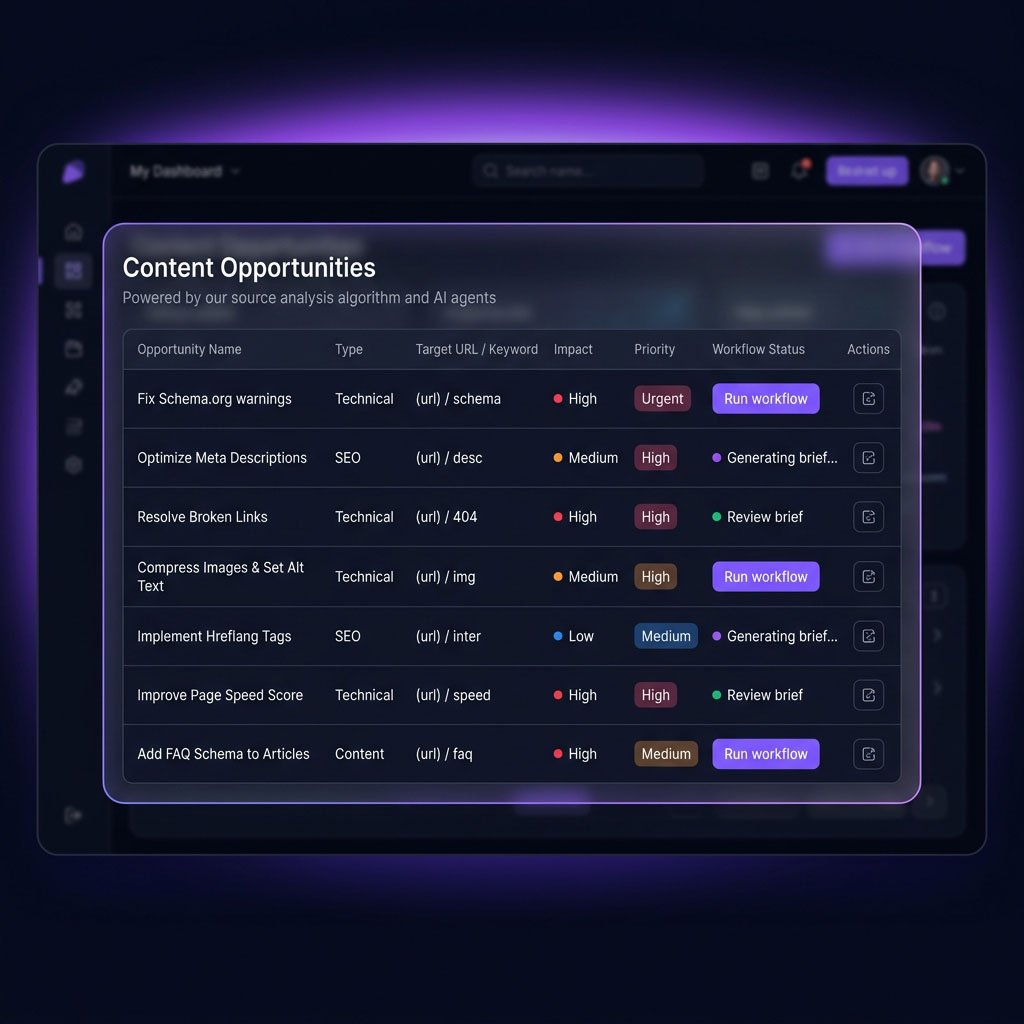
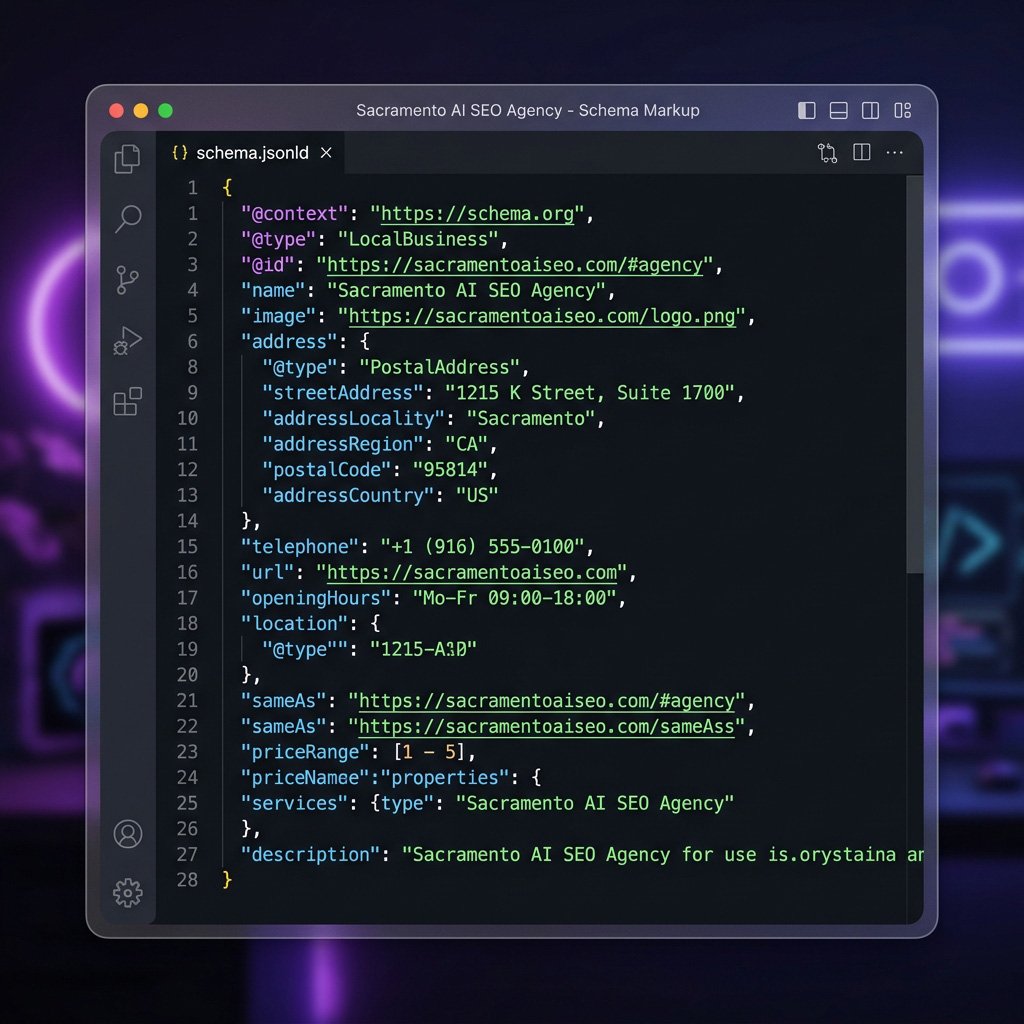
Schema markup is the language your website uses to communicate directly with AI systems about your business identity, service area, and expertise. For Sacramento local businesses, we implement:
LocalBusiness Schema The foundational entity declaration on your homepage and all service pages:
- Business name, address, and phone number in a standardized, machine-readable format.
- areaServed specifying all Sacramento neighborhoods and zip codes within your service territory.
- openingHoursSpecification for all operating days and hours.
- priceRange where applicable.
- sameAs attributes linking to verified GBP, LinkedIn, Yelp, and primary directory listings.
- Service name, description, and service type.
- Geographic area where the service is offered.
- Provider link back to the LocalBusiness entity.
- Question and answer pairs marked up in structured format.
- Eligible for Google’s FAQ rich results and for AI Overview extraction as verified Q&A content.
- Structured site hierarchy navigation that reinforces your site’s content organization to AI crawlers.
Neighborhood Landing Page Architecture
The highest-leverage local SEO content investment for most Sacramento businesses is a structured set of neighborhood-specific landing pages one per priority service area. These pages accomplish three simultaneous objectives: they expand your Local 3-Pack proximity grid by creating neighborhood-specific entity signals, they capture hyper-local organic search traffic for neighborhood-scoped queries, and they provide AI retrieval systems with the geographic specificity needed to surface your business for location-phrased AI queries.
Each neighborhood landing page we build follows a consistent architecture:
- H1: Primary service + neighborhood name (e.g., “Family Dental Care in Land Park, Sacramento”)
- Opening passage: Direct answer to why a Land Park patient should choose your practice 40 to 80 words, no hedging.
- Local context section: Specific references to the neighborhood landmarks, nearby streets, community character that establish genuine geographic relevance rather than keyword insertion.
- Service availability section: Specific services offered, insurance networks accepted, appointment availability, and hours formatted for AI extraction.
- Embedded map: Google Maps embed centered on the neighborhood.
- Local schema: LocalBusiness schema declaring this specific neighborhood as a served area.
- Three-Sentence Bridge: Internal link to the corresponding service page with contextually natural anchor text.
Citation Network and NAP Standardization
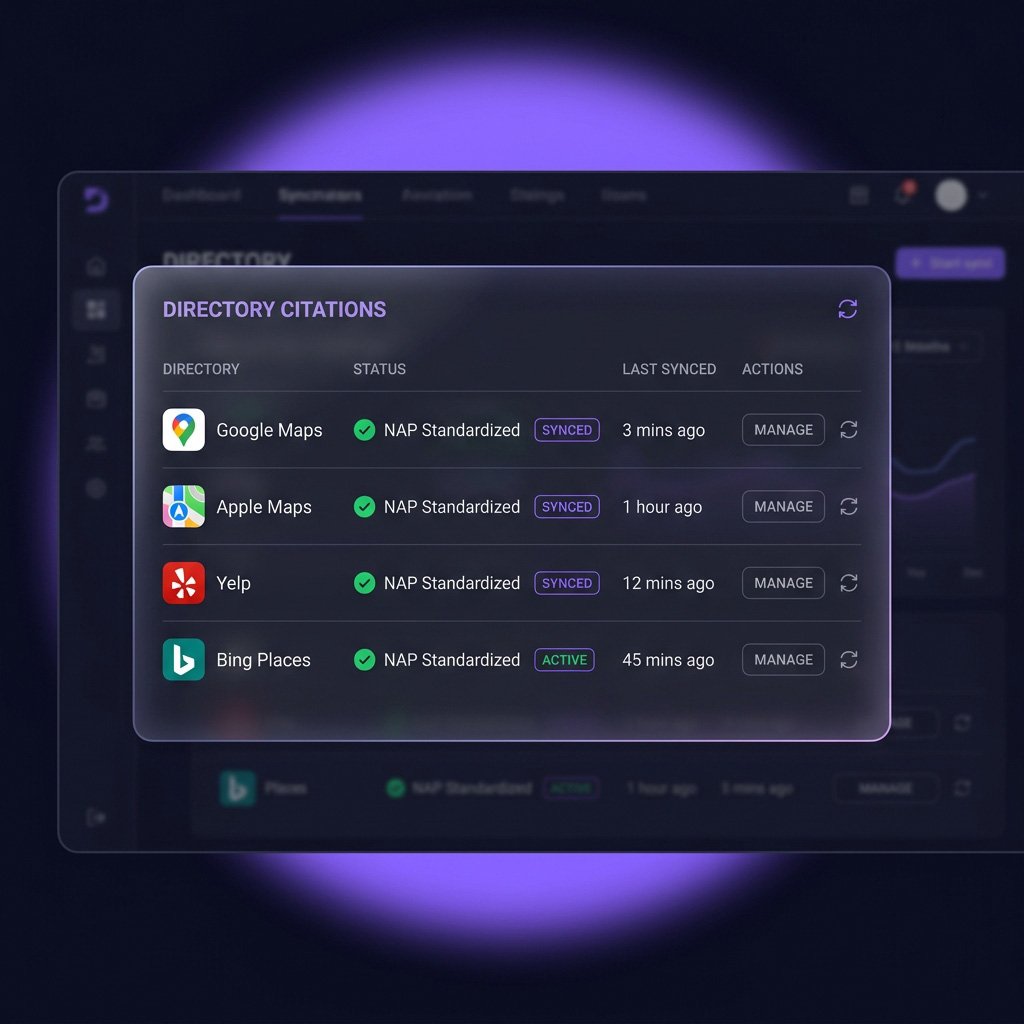
A complete Sacramento local citation network spans 22 to 30 directory platforms across general directories, industry-specific directories, and Sacramento-local platforms. We build and maintain:
- Tier 1 general directories: Google, Yelp, Apple Maps, Bing Places, Facebook, Foursquare, Yellowpages.
- Tier 2 industry-specific directories: Avvo and Justia (legal), Healthgrades, Vitals, Zocdoc (healthcare), Clutch and G2 (B2B agencies), Houzz and Angi (home services).
- Tier 3 Sacramento-local directories: Sacramento Chamber of Commerce, Sacramento Business Journal listings, Sacramento area neighborhood association directories where applicable.
Internal Linking Architecture
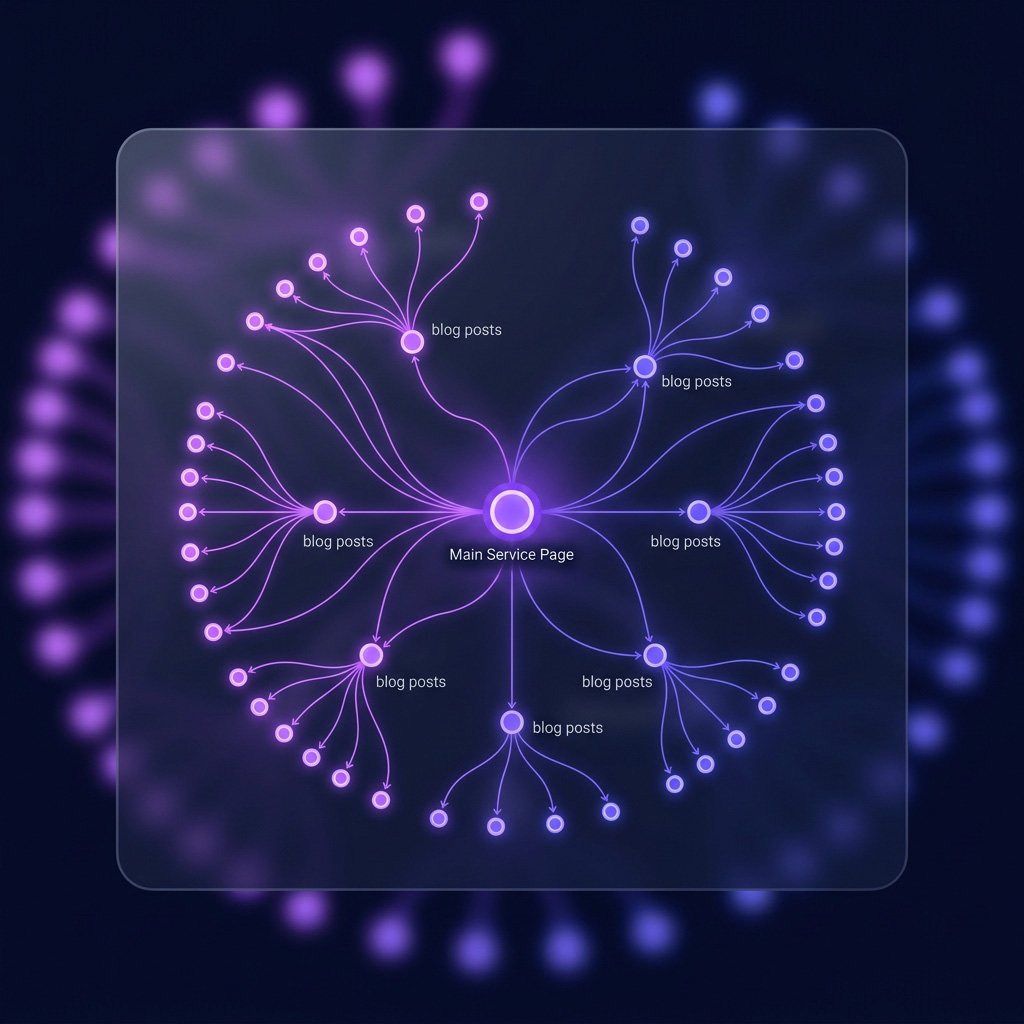
Internal linking is the mechanism by which authority flows from high-traffic educational content to commercial service pages and it is the structural element that most Sacramento businesses implement incorrectly or not at all. A blog post that earns significant traffic and backlinks but has no structured internal links to your service pages is producing authority that dissipates rather than compounds.
We implement a Three-Sentence Bridge internal linking protocol across your full content library:
Every blog post that covers a topic related to a service you offer contains a Three-Sentence Bridge a three-sentence passage that:
- Completes the educational point being made in that section of the post.
- Names a specific limitation or next-step need that the educational content creates.
- Links to the relevant service page with natural, descriptively accurate anchor text.
Monthly Local SEO Deliverables
Our local SEO engagement is a fully managed monthly service. Every month includes a structured set of execution deliverables and a performance report documenting every metric moved.
| Monthly Deliverable | Scope |
|---|---|
| Technical Monitoring | Monthly Core Web Vitals scan, crawl error detection, indexation status check |
| Schema Maintenance | Quarterly schema audit for accuracy; updates triggered by any business change |
| Citation Monitoring | Quarterly NAP consistency scan across 22 directories; corrections submitted within 7 days of detection |
| Neighborhood Page Updates | Quarterly content refresh of existing neighborhood pages; new pages added as expansion priorities shift |
| Internal Link Audit | Monthly check that all Three-Sentence Bridges are resolving correctly; new bridge opportunities flagged as new content is published |
| Proximity Grid Report | Monthly Local 3-Pack rank tracking across 9 to 25 geographic test points within your Sacramento service area |
| Organic Performance Report | Monthly GSC and GA4 data: impressions, clicks, CTR, top-performing pages, and conversion attribution |
How Local SEO Connects to Your Full GEO Stack
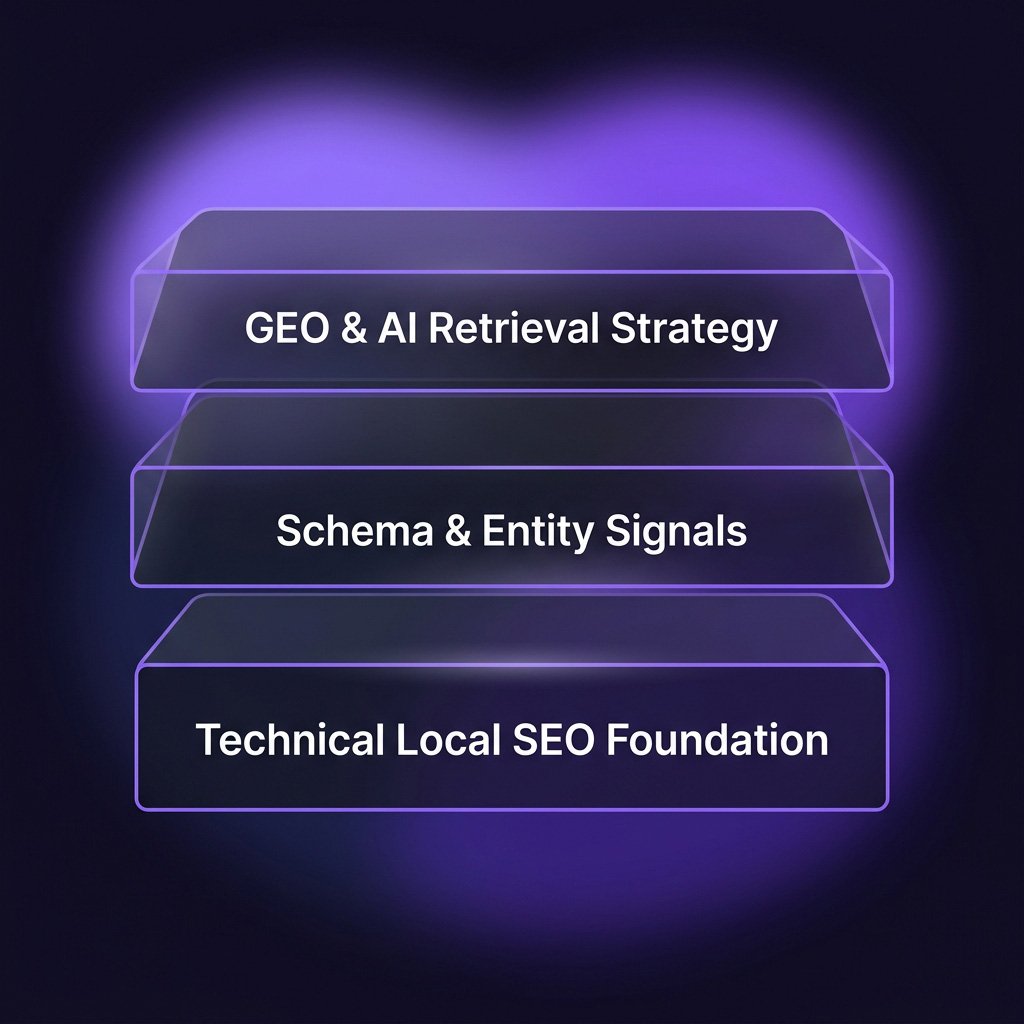
Local SEO is the foundation layer not a standalone service. Every GEO deliverable we execute builds on top of a healthy local SEO infrastructure. Schema implementation feeds entity verification. Neighborhood pages feed proximity grid expansion and AI citation geography. The citation network feeds ChatGPT’s trust scoring. Internal linking feeds service page authority.
A business that invests in GEO content and AI citation strategy without fixing its local SEO foundation is building on sand. The AI retrieval systems that surface recommendations cross-reference your website schema, GBP data, and citation network simultaneously weaknesses in any layer suppress the effectiveness of the others.
Generative Engine Optimization service is designed to operate on top of a complete local SEO foundation. For clients engaging us for GEO without a prior local SEO foundation, the initial 21 days of every GEO engagement include the core local SEO implementation schema, NAP standardization, and GBP service area configuration before content optimization begins.
For clients who want to build the foundation independently before committing to a full GEO engagement, our AI SEO Audit includes a full local SEO infrastructure assessment identifying exactly which foundation elements are in place, which are partial, and which are absent.
Frequently Asked Questions
How long does it take to see results from local SEO?
Technical fixes, schema implementation, NAP standardization, Core Web Vitals remediation produce measurable results within 21 to 45 days of implementation. Neighborhood page authority and proximity grid expansion develop over 60 to 90 days. Full compound effect from citation network growth and internal link equity accumulation develops over 6 to 12 months. The fastest visible result in most Sacramento engagements is proximity grid expansion measurable within 30 days of NAP standardization and service area configuration. See the exact timeline from one Sacramento case study.
Do I need local SEO if I already rank on Google?
Ranking on Google for your primary keywords does not guarantee Local 3-Pack visibility across your Sacramento service area, AI citation eligibility, or neighborhood-level search coverage. A business can rank #2 organically for “Sacramento personal injury attorney” while being invisible in the Local 3-Pack for searches originating from Arden-Arcade or Natomas, and absent from every ChatGPT recommendation for the same category. Local SEO and traditional organic SEO address overlapping but distinct ranking systems both require structured optimization.
Can you fix our local SEO without rebuilding the entire site?
Yes. The majority of local SEO implementation schema markup, NAP standardization, neighborhood page production, internal link additions is executed without touching your existing site architecture or design. Schema is added as JSON-LD in the <head> section without altering visual presentation. Neighborhood pages are new additions, not replacements of existing pages. NAP corrections happen at the directory level, not on your website. The only technical changes that require site-level access are Core Web Vitals remediation and server-side rendering fixes both of which we coordinate with your development team.
How does local SEO interact with paid Google advertising?
Local SEO and Google paid advertising (Google Ads, Local Services Ads) operate on separate systems and do not directly influence each other’s performance. Strong local SEO, particularly high review velocity and complete GBP does improve Local Services Ad performance because LSA ranking factors overlap significantly with organic Local 3-Pack factors. We manage local SEO as an organic channel; paid advertising strategy is a separate scope we can coordinate with but do not manage directly.